
The IceCube Upgrade: A Bridge to Gen2
Speaker
Date
Time
Place
Cosmology Hall (Room 7S1)
Abstract
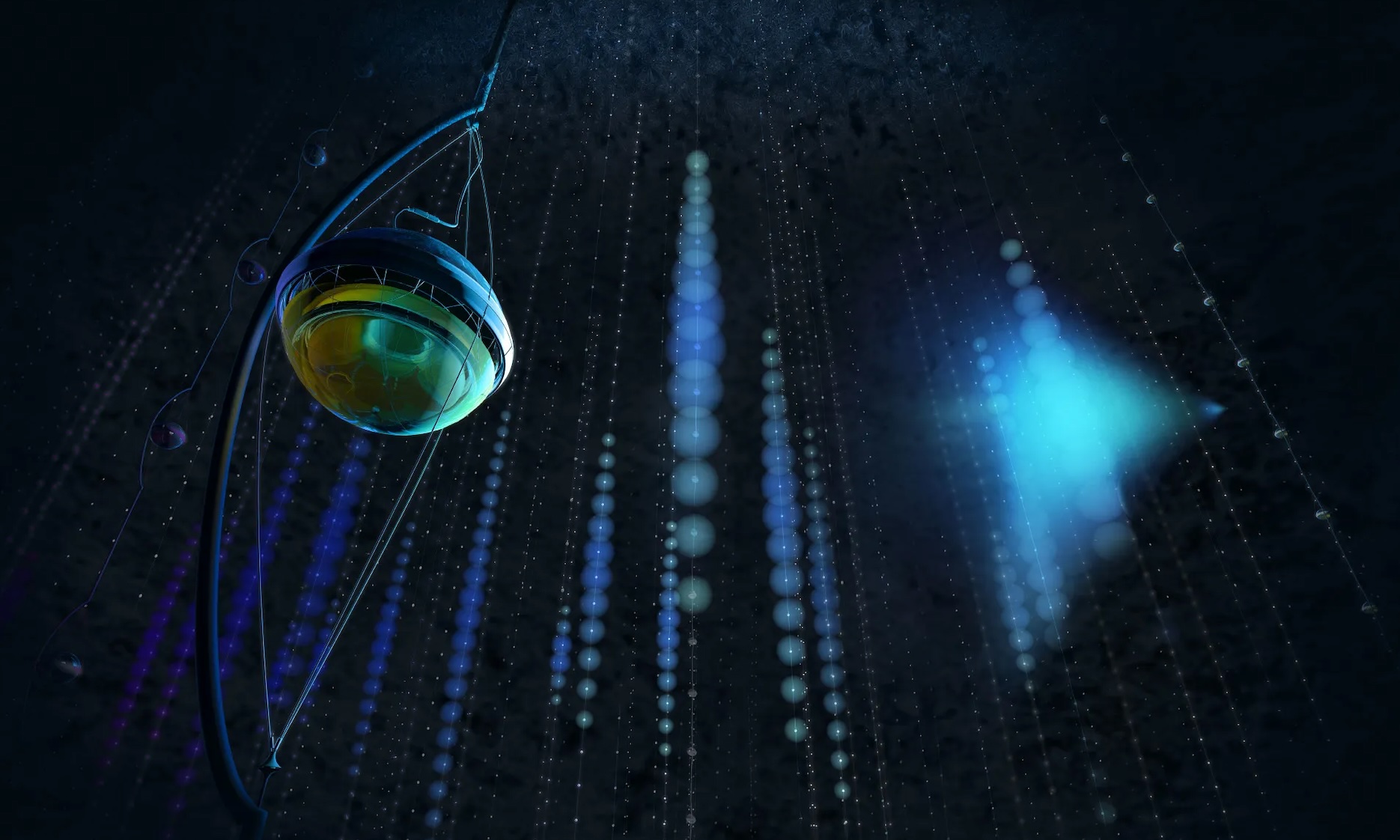
Neutrinos offer a unique window into some of the most energetic and distant phenomena in the Universe. The IceCube Neutrino Observatory at the South Pole is currently the world's largest neutrino detector, utilizing a cubic kilometer of Antarctic ice instrumented with thousands of optical sensors to detect Cherenkov radiation. In this talk, I introduce the science behind IceCube, detail the mechanisms of neutrino detection and reconstruction in ice, and highlight key discoveries—ranging from the identification of astrophysical neutrino sources to new constraints on fundamental particle physics.
I will also share insights and experiences from my two expeditions to the South Pole, where I contributed to the IceCube Upgrade project aimed at enhancing the observatory’s low-energy sensitivity and calibration. Finally, I provide an outlook on IceCube-Gen2, the next-generation observatory designed to significantly expand our scientific reach and open new frontiers in astroparticle physics.
Biography
Anatoli Fedynitch is an astroparticle physicist whose research focuses on cosmic rays, atmospheric particle cascades, and neutrino production relevant to experiments such as the IceCube Neutrino Observatory. Since 2021 he has been a Assistant Research Fellow at Academia Sinica in Taiwan. Previously he was a JSPS and Humboldt Feodor Lynen Research Fellow at the Institute for Cosmic Ray Research at the University of Tokyo, following postdoctoral positions at the University of Alberta and DESY in Zeuthen.