
Probing Fundamental Physics with CMB Polarization Observations
Speaker
Date
Time
Place
Cosmology Hall (Room 7S1)
Abstract
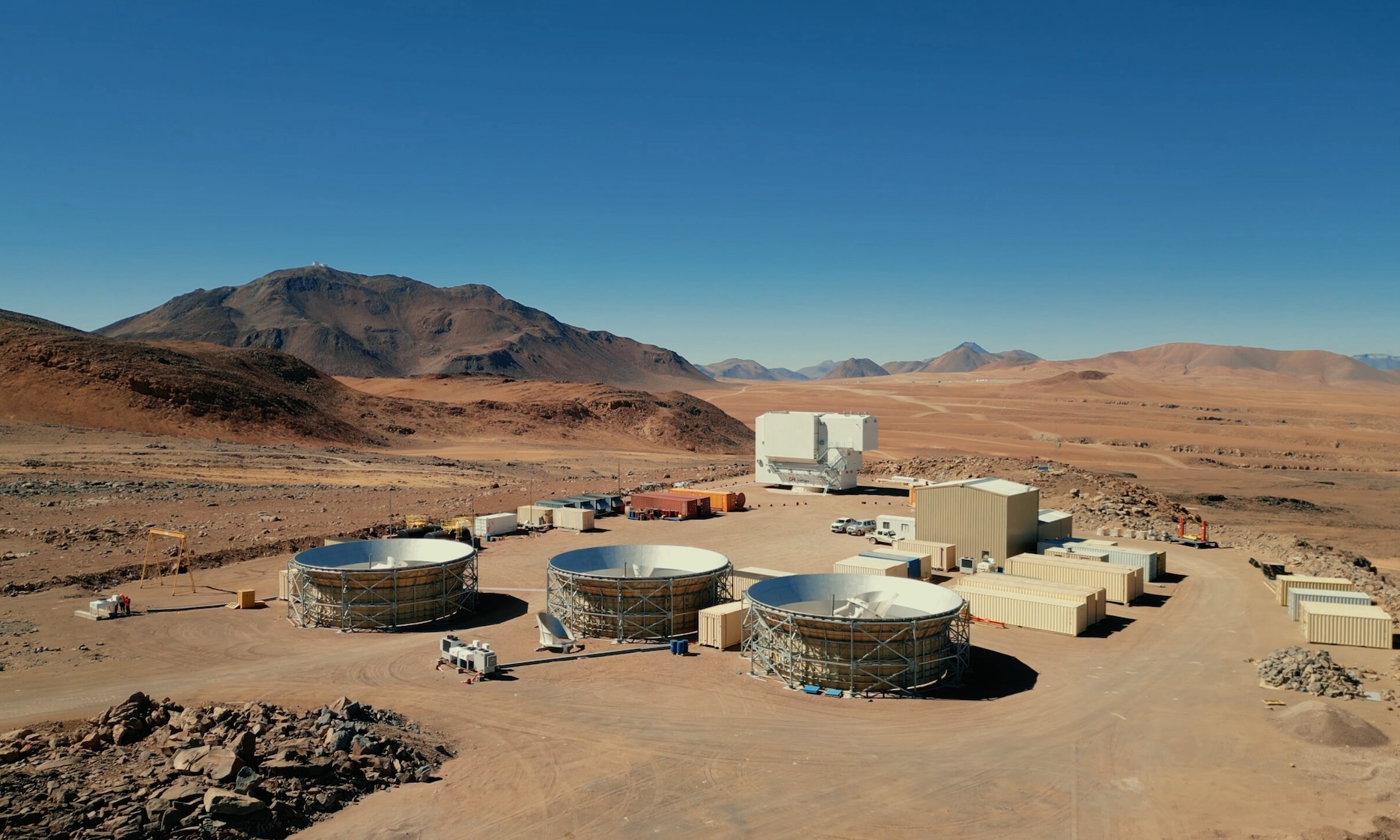
The cosmic microwave background (CMB) has been a cornerstone of modern cosmology, offering a unique window into the physics of the early universe. Over the past several decades, CMB observations have transformed our understanding of cosmology, providing precise constraints on the universe’s age, composition, geometry, and evolution. While early studies focused on temperature anisotropies, recent efforts have shifted toward measurements of linear polarization—particularly the curl-like B-mode pattern—which carries the imprint of inflationary gravitational waves and opens a path to probing physics beyond the Standard Model. In this talk, I will begin with an overview of CMB observations and their role in cosmology, highlighting key milestones that shaped the field. I will then focus on the current and near-future landscape, emphasizing the quest for primordial B-mode polarization and its implications for inflationary physics. In addition, I will discuss how CMB polarization provides a novel avenue to search for axion-like particles through cosmic birefringence, not only using the CMB itself but also leveraging polarized astrophysical sources such as the Crab Nebula. These complementary approaches illustrate the interplay between cosmology and fundamental physics. Examples will include recent results from experiments such as POLARBEAR and prospects for upcoming projects like the Simons Observatory and LiteBIRD. Finally, I will outline the long-term vision for CMB research, including next-generation ground-based and space missions, and the transformative role they will play in advancing our understanding of the early universe and new physics.
Biography
Yuji Chinone is an Associate Professor at KEK in Japan. He is an experimental astrophysicist whose research explores fundamental physics through observations of the cosmic microwave background. He was a member of the POLARBEAR experiment, which achieved the first detection of B-mode polarization in 2014, and is currently working on the Simons Array, the Simons Observatory, and the upcoming LiteBIRD mission.