
The Degree of Fine-Tuning in our Universe and Others
Speaker
Date
Time
Place
Cosmology Hall (Room 7W3)
Abstract
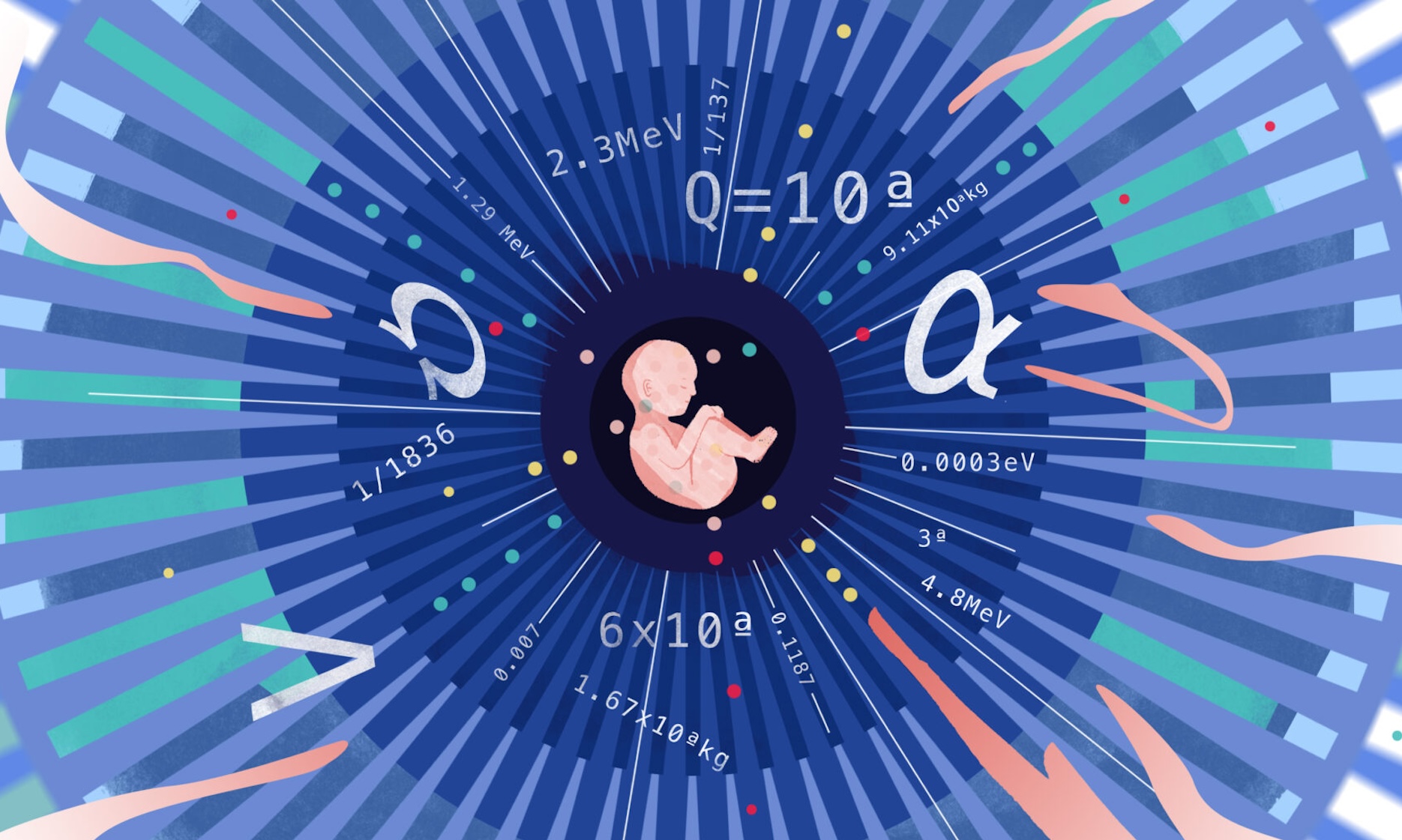
The fundamental constants of nature must fall within a range of values in order for the universe to develop structure and support life. This talk outlines the current constraints on these quantities in order to assess the degree of tuning required for the universe to be viable. In the realm of particle physics, the relevant parameters are the strengths of the fundamental forces and the particle masses. Additional astrophysical parameters include the cosmic energy density, the cosmological constant, the abundances of baryons and dark matter, and the amplitude of primordial density fluctuations. These quantities are constrained by the need for the universe to live for a long time, emerge from its early epochs with an acceptable chemical composition, and successfully produce galaxies. On smaller scales, stars and planets must be able to form and function. The stars must also have sufficiently long lifetimes and hot surface temperatures. We also consider potential fine-tuning related to the triple alpha reaction that produces carbon, the case of unstable deuterium, and the possibility of stable diprotons. For all of these issues, the goal is to delineate the range of parameter space for which universes can remain habitable. In spite of its biophilic properties, our universe is not optimized for the emergence of life, in that favorable variations could result in more galaxies, more stars, and potentially more habitable planets.
Biography
Fred Adams is the Ta-You Wu Collegiate Professor of Physics and Professor of Astronomy at the University of Michigan. A leading theoretical astrophysicist, he is known for his research on star formation, circumstellar disks, the stellar initial mass function, and the formation and evolution of planetary systems. His work also addresses broader questions in cosmology, including the long-term evolution of the universe and the conditions required for stars and habitable planets to exist.